Industrial floor maintenance in active distribution hubs requires robust equipment and clear operating procedures. Fine dust, packing fragments, and pallet debris accumulate quickly across high-traffic transit aisles. Leaving loose materials uncleaned decreases surface friction, causing wheel slippage for forklift trucks and increasing floor wear over time.
Purchasing commercial floor cleaning equipment involves significant capital for facility management teams. A structured pre-purchase evaluation helps decision-makers select models tailored to operational demands. Asking targeted questions prior to ordering prevents unexpected maintenance expenses and avoids costly equipment downtime.
Evaluating Facility Dimensions and Surface Characteristics
First, procurement managers must evaluate the total square footage requiring regular cleaning. Small storage rooms require compact manual or walk-behind units, whereas vast logistics hubs demand wider sweeping paths. Purchasing a warehouse sweeper machine that matches the physical footprint of the site keeps daily cleaning cycles predictable and efficient.
Second, buyers need to analyze the exact types of waste generated during daily tasks. Coarse wooden splinters, plastic bands, and fine dust require different brush materials and hopper capacities. Standard nylon brushes handle light debris, whereas abrasive metal-blend bristles are necessary for dense industrial residues.
Third, floor texture and facility layouts influence machine selection significantly. Smooth concrete floors present different traction demands compared to coarse outdoor asphalt or steep ramp inclines. Determining whether the unit works indoors, outdoors, or across mixed environments guides proper tire selection and chassis strength choices.
Aisle width and turning radius also play a role in equipment selection. Narrow aisles between pallet racks require high maneuverability to avoid collisions with racking structures. Facilities with tight corners need compact turning capabilities to maintain continuous cleaning passes without manual back-and-forth adjustments.
Essential Technical Features and Operational Requirements
Power system options directly affect operational schedules and energy management strategies. Electric battery units produce zero direct emissions and operate quietly, making them suitable for enclosed indoor storage areas. Engine-driven models offer extended operational range for open yards, provided adequate ventilation exists to manage exhaust fumes.
Dust filtration capability is another key factor in maintaining clean air standards within indoor facilities. Internal vacuum fans pull fine particles into specialized filter elements during sweeping passes. A reliable warehouse sweeper captures airborne dust within its collection system instead of returning particles to working zones.
Hopper capacity and dumping mechanisms affect overall worker productivity during long shifts. Larger hoppers reduce the required frequency of emptying trips to waste collection areas. Hydraulic high-dump systems allow operators to empty debris directly into standard industrial dumpsters without manual lifting or physical exertion.
Control panel designs should remain intuitive so facility personnel master equipment operation quickly. Simple user interfaces shorten training cycles for new staff members and reduce operational mistakes. Clear indicator lights and basic control buttons allow operators to focus on driving safely around warehouse obstacles.
Assessing Automation Options and Special Equipment Features
Many facility operators now consider automated cleaning equipment to reduce ongoing labor expenses. Autonomous cleaning robots follow mapped routes independently, maintaining consistent cleaning standards across scheduled shifts. Implementing robotic equipment allows facility staff to focus on primary logistics, inventory management, and shipping tasks.
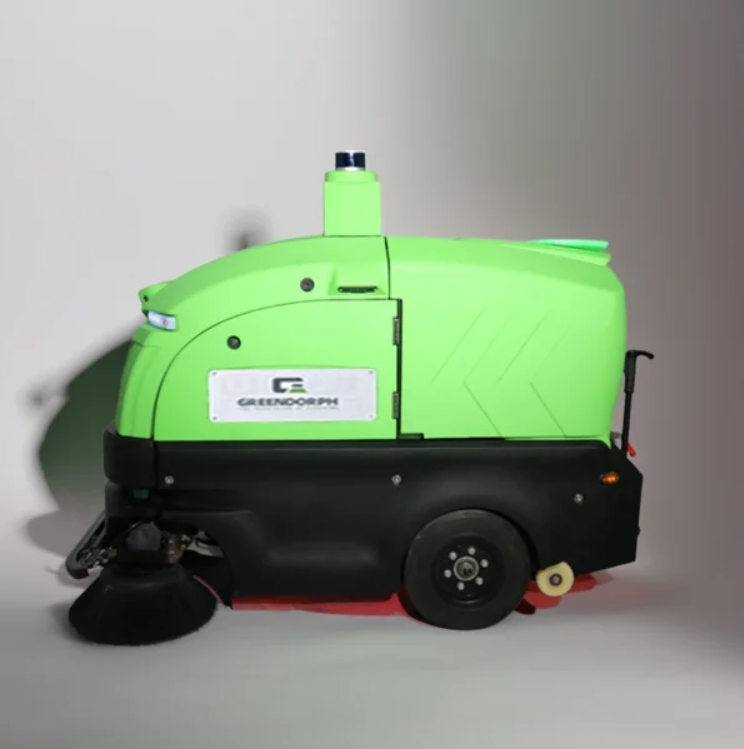
When reviewing automated machinery, buyers can examine specialized offerings from industry manufacturers. For example, Greendorph manufactures the Auto Sweeper YJ130 to address large-scale outdoor sanitation tasks. This model functions as a fully autonomous outdoor sweeper designed for expansive commercial grounds and industrial facilities.
The Auto Sweeper YJ130 is a fully autonomous outdoor sweeper featuring a primary cleaning system enhanced by three auxiliary functions: suction, airflow-assist, and misting spray. Delivering over 95% cleaning efficiency, it operates continuously for 6-8 hours. Ideal for large-area outdoor sanitation across parks, industrial campuses, sidewalks, schools, and similar environments.
Combining autonomous outdoor units with indoor cleaning equipment provides a comprehensive facility maintenance strategy. Autonomous units handle broad exterior pathways and perimeter roads, while standard indoor sweepers maintain interior storage zones. This division of labor keeps overall operational throughput consistent across the facility.
Calculating Total Cost of Ownership and Vendor Support
Initial purchase price represents only a fraction of total equipment costs over time. Operational budgets must account for consumable parts like replacement main brooms, side brushes, dust filters, and battery maintenance. Selecting a warehouse sweeper machine with easily accessible components simplifies routine inspections and lowers long-term maintenance costs.
Equipment downtime interrupts operational schedules and increases labor costs. Procurement teams should verify supplier warranty coverage, local spare parts availability, and technical service response times. Manufacturers like Greendorph offer structured training programs and technical support materials to help distributor networks maintain high operational reliability for client fleets.
Staff safety training forms another crucial component of total ownership planning. Suppliers should provide comprehensive user manuals, safety documentation, and operational guidelines for site staff. Proper operator instruction prevents accidental equipment damage, extends component lifespans, and maintains safe operating conditions in busy logistics hubs.
Key Takeaways for Industrial Cleaning Equipment Selection
Selecting appropriate floor cleaning machinery requires thorough evaluation of facility dimensions, debris types, power systems, and total operating expenses. Asking detailed questions regarding filter capabilities, hopper sizes, and automation features helps facility managers choose a warehouse sweeper that matches site specifications precisely and performs reliably over time.
Careful preparation and clear technical criteria enable procurement teams to invest wisely. By balancing initial expenditure with ongoing support, businesses maintain clean, safe, and efficient environments across warehouse spaces and exterior industrial facilities.
