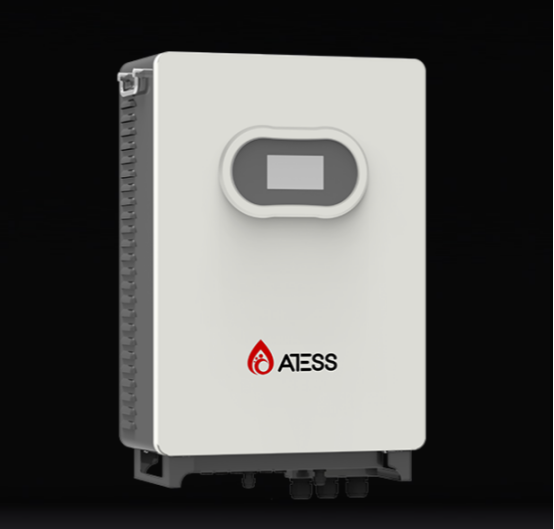
For system designers evaluating power conversion equipment, a hybrid inverter represents a departure from traditional solar inverters. Unlike standard grid-tie units that only convert DC from panels to AC for immediate use, a hybrid inverter integrates battery management, grid interaction, and PV conversion into a single enclosure. This consolidated architecture reduces component count while enabling functions that separate inverters cannot perform alone. Atess manufactures such all-in-one solar hybrid inverter systems spanning 5kW to 150kW, designed for applications from small commercial facilities to larger industrial installations.
Three Core Operating Modes
A solar hybrid inverter operates in three distinct states. In on-grid mode, the unit synchronizes with utility power, feeding excess generation back while drawing grid power when solar production falls short. When grid faults occur, the hybrid inverter automatically transfers to off-grid mode within 10 milliseconds, sustaining critical loads without interruption. A third hybrid mode allows simultaneous power flow from solar, battery, and grid sources, managed through programmable settings such as peak shaving, backup, or self-consumption optimization.
System Integration Requirements
Proper deployment of a solar hybrid inverter requires attention to two compatibility factors. First, the battery pack nominal voltage must fall within the inverter’s supported range—Atess HPS150, for example, requires 360V to 440V. Second, communication protocols between the hybrid inverter and battery must match to enable charge control, status monitoring, and safety protections. These requirements are not arbitrary; they ensure the bidirectional energy flow central to hybrid operation functions correctly.
Practical Distinction from Standard Solar Inverters
The essential difference between a solar inverter and a hybrid inverter lies in outage response. A conventional grid-tie inverter ceases operation during a blackout for safety reasons, while a hybrid inverter continues powering loads from battery storage. This capability transforms solar investment from daytime-only savings into round-the-clock energy resilience.
A hybrid inverter serves as the central energy manager in modern solar-plus-storage systems, coordinating PV generation, battery storage, and grid supply through three distinct operating modes. Atess delivers this functionality across a 5kW to 150kW power range, with attention to battery voltage compatibility and communication protocol integration as critical deployment considerations for any commercial or industrial application.
