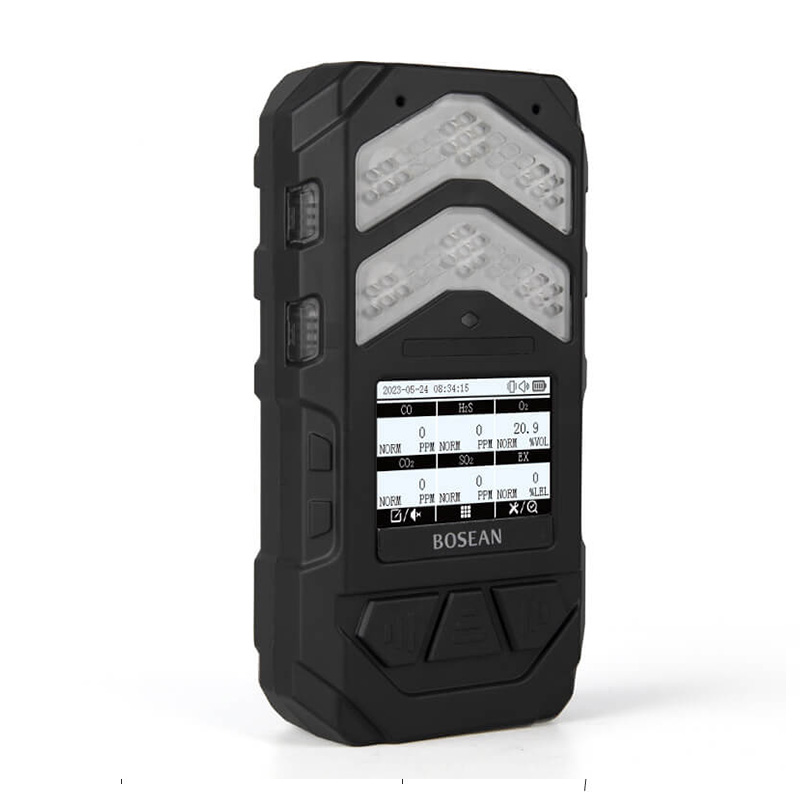
Industrial facilities often face several atmospheric hazards simultaneously, making multi-gas monitoring an important part of workplace safety and process management. Choosing suitable equipment requires evaluating the number of detection channels, sampling methods, calibration functions, alarm systems, and data output options.
A portable gas detector helps workers identify hazardous conditions, while a portable multi gas analyzer can provide readings for several selected gases through one instrument. Understanding these features helps businesses select equipment that matches their operational requirements.
- Understanding Gas Channels in Multi-Gas Instruments
Gas channels determine how many different gases an instrument can monitor simultaneously. Common configurations include two-, four-, and six-gas models, depending on the intended application and sensor compatibility. Typical monitoring targets include oxygen, combustible gases, carbon monoxide, hydrogen sulfide, ammonia, and other toxic substances.
The number of channels alone does not determine whether an instrument is suitable. Buyers should first identify the gases that may occur in their working environments. For example, wastewater facilities may prioritize hydrogen sulfide, oxygen, and combustible gases, while chemical processing plants may require additional sensors for specific toxic compounds.
Measurement range and resolution also deserve attention. Each sensor has its own detection range, accuracy, and response characteristics. Procurement teams should verify these specifications individually instead of assuming that all channels provide identical performance.
A portable gas detector with multiple sensors can reduce the need to carry separate instruments during inspections. However, the selected configuration must correspond to the facility’s actual risk assessment and applicable safety requirements.
- Diffusion and Pump Sampling: Which Method Is Suitable?
Sampling methods influence how gas enters the instrument and where measurements can be taken. Diffusion sampling allows surrounding gases to reach the sensors naturally. This design is commonly used for personal monitoring because it supports continuous measurement without requiring a sampling pump.
Pump sampling works differently. An internal pump draws gas through a probe or sampling tube before delivering it to the sensors. This arrangement is useful when workers need to examine remote locations, ventilation ducts, tanks, or other areas that cannot be approached directly.
Neither method is universally better. Diffusion instruments generally offer simpler operation and fewer mechanical components. Pump-based systems provide greater flexibility for remote sampling but require attention to tubing length, flow rate, filters, and potential leaks.
When purchasing a portable multi gas analyzer, businesses should consider whether the instrument will mainly accompany workers or support targeted atmospheric inspections. The sampling method should reflect the actual work process rather than simply the preference for additional features.
- Data Output and Calibration Functions
Reliable gas measurements are useful only when operators can interpret and manage the information. A clear display should present gas concentrations, measurement units, battery status, and alarm conditions. For industrial applications, straightforward controls can reduce operating difficulties during inspections.
Data output is another important consideration. Some instruments provide USB communication or computer-based data reading, allowing users to review measurements and maintain inspection records. Depending on the model, available information may include concentration readings, calibration history, and alarm events.
Calibration functions also influence long-term measurement reliability. Multi-point calibration can help adjust sensor responses across different concentrations. However, calibration procedures must follow the manufacturer’s instructions and use appropriate certified calibration gases.
A portable gas detector should also provide clear warnings when measurements reach configured alarm thresholds. Sound, visual, and vibration alerts are particularly useful in noisy industrial environments where workers may not immediately notice a visual warning.
- BoseanK-600N: Six-Gas Monitoring for Industrial Users
The Bosean K-600N is a diffusion-type six-in-one gas detector developed for industrial environments requiring multi-gas monitoring. Its design incorporates an advanced integrated circuit and digital-analog hybrid communication technology. The instrument uses high-strength engineering plastics combined with compound non-slip rubber, providing a durable housing intended for demanding working conditions.
One of its practical features is its four alarm methods: sound, light, vibration, and display indication. These options help communicate hazardous conditions through different warning channels, allowing operators to recognize alarms under varying workplace conditions.
The K-600N also supports gas unit switching, which provides flexibility when users need to work with different measurement units. Its multi-point calibration function supports up to five calibration points, offering additional adjustment flexibility for configured sensors.
As a portable multi gas analyzer, the K-600N is relevant to businesses that need to monitor several selected gas hazards using one handheld instrument. Its diffusion sampling design is particularly suitable for routine atmospheric monitoring around workers and equipment.
However, buyers should confirm the exact six-gas sensor configuration, individual measurement ranges, accuracy, communication interfaces, and data export capabilities before purchasing. The available product information confirms its alarm and calibration functions but does not establish every possible data-recording feature.
- How Businesses Should Compare Portable Multi-Gas Equipment
Industrial procurement teams should evaluate equipment according to operational priorities rather than channel count alone. A suitable portable multi gas analyzer should provide the required sensors, appropriate measurement ranges, dependable alarms, and manageable calibration procedures.
Environmental protection is equally important. Dust, moisture, temperature fluctuations, and potentially explosive atmospheres can affect instrument selection. Buyers should verify the product’s protection ratings and explosion-protection certification against the conditions at their facilities.
Technical support should also be considered. An experienced supplier can help customers understand sensor compatibility, calibration intervals, replacement requirements, and operating limitations. These factors influence equipment reliability and total ownership costs throughout its service life.
Building a Reliable Multi-Gas Monitoring Strategy
Effective gas monitoring depends on matching instrument capabilities to workplace hazards. Channel configuration determines which gases can be measured, sampling design affects measurement locations, and calibration and data functions support consistent monitoring practices.
Bosean develops and supplies gas detection and measurement instruments and provides technical services to customers. Its K-600N combines six-gas diffusion monitoring with multiple alarm methods, unit switching, and five-point calibration support. For businesses considering a portable gas detector, verifying the exact sensor configuration and technical specifications remains essential. Proper equipment selection, routine maintenance, and worker training together contribute to a more dependable industrial safety program.
