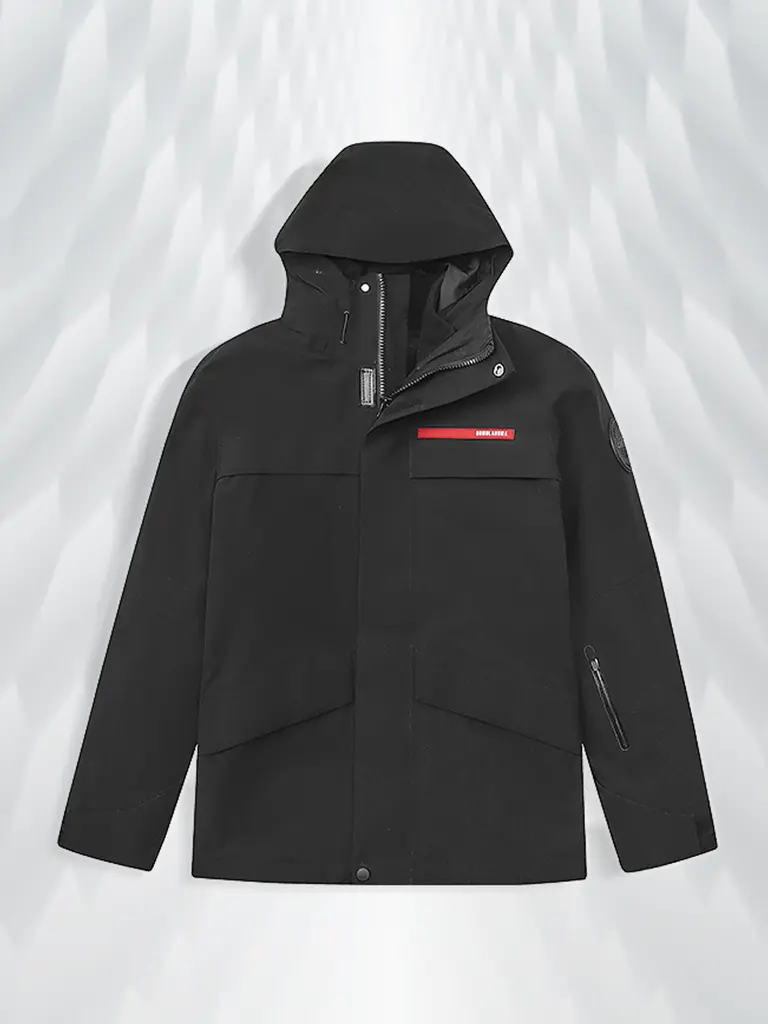
Rain, wet snow, coastal humidity, and perspiration can all affect how a winter jacket performs. Even a garment that feels warm in dry conditions may become less comfortable after its insulation absorbs moisture, particularly if the fill clumps, loses loft, or takes a long time to dry. This makes moisture response an important factor when assessing the best synthetic insulation for jackets intended for humid climates.
Rather than focusing only on warmth-to-weight ratios, garment developers need to understand how different insulation structures behave when damp. Y-Warm is among the thermal insulation brands working with lightweight material solutions for functional apparel, a category in which moisture management and thermal performance must be considered together.
What Happens to Synthetic Insulation When It Gets Wet?
Synthetic insulation is commonly made from polyester fibers arranged in sheets, webs, or layered structures. These fibers generally absorb less water than natural down, but that does not mean a synthetic-filled jacket remains unaffected by moisture. Water can collect between fibers, occupy spaces that would otherwise contain insulating air, and increase the garment’s overall weight.
The extent of performance loss depends on fiber arrangement and construction. Some loose fills may shift or form uneven clusters after repeated compression and moisture exposure. Continuous sheets can offer more uniform coverage, although their behavior still depends on density, bonding, and the way they are attached to the garment. Neither format should be judged by fiber type alone.
Drying behavior also matters. A jacket that retains moisture for an extended period may feel cold after activity stops, even if its insulation has not suffered permanent damage. In humid environments, limited airflow can slow evaporation, making the combination of insulation, lining, and outer fabric particularly important.
Comparing Synthetic Fill Structures for Humid Conditions
Loose-fill polyester insulation often uses fine fibers to create a lofty layer that traps still air. Its softness and compressibility can suit casual winter jackets, but the distribution of fill needs attention. If fibers migrate or become uneven, certain areas may offer less thermal coverage than others, especially around shoulders, cuffs, and frequently compressed sections.
Sheet-style insulation provides a different construction approach. The material is formed into a more consistent layer, which can simplify garment assembly and reduce the risk of loose fill moving within compartments. Its flexibility, thickness, and recovery after compression vary by design, so samples should be assessed under the conditions expected during actual wear.
For buyers comparing the best synthetic insulation for jackets, moisture resistance should be considered alongside loft retention, drying time, flexibility, and durability. A high initial insulation value does not necessarily translate into better comfort in damp weather. Testing should also distinguish between water absorption by the insulation itself and water held within the complete garment assembly.
How Jacket Construction Influences Damp-Weather Performance
The outer shell plays a major role in moisture control. A water-resistant face fabric can reduce rain penetration, while a breathable construction helps water vapor move outward from the body. If the shell restricts vapor transmission too strongly, perspiration may accumulate inside even when rain never reaches the insulation.
Seams and construction details can create additional weak points. Stitching holes, poorly sealed joins, and areas where fabric layers overlap may allow external moisture to enter. At the same time, excessive quilting or dense bonding can affect flexibility and airflow. The jacket’s design must account for both external water exposure and moisture generated by the wearer.
Layer compatibility deserves equal attention. A lining that spreads moisture may help it evaporate across a wider area, while a poorly matched combination of shell and insulation can slow drying. Ventilation features such as adjustable cuffs, front openings, and underarm zippers may also help release excess heat during activity. These design choices can be as important as the insulation specification itself.
Practical Testing and Material Selection
Laboratory assessments can establish useful baseline information, but damp-weather performance requires more than a single thermal test. Relevant evaluations include water absorption, drying time, thermal resistance before and after moisture exposure, and recovery following compression. Results should be interpreted according to the test method, since different procedures may produce values that are difficult to compare directly.
Garment-level trials can reveal issues that material samples cannot. A jacket can be exposed to controlled humidity or light moisture, followed by movement and rest periods that reflect typical use. Evaluators can observe whether the insulation shifts, whether the lining feels clammy, and how quickly the garment returns to a comfortable condition after drying.
- Warm’s thermal insulation range includes a 0.7 mm material option, giving apparel developers a thin-layer construction to consider when designing lightweight garments. Its suitability for humid-weather jackets depends on the full combination of shell, lining, garment structure, and intended use; insulation thickness alone does not establish moisture performance. Sample testing within the finished construction is necessary before drawing conclusions about warmth or drying behavior.
Conclusion
A jacket intended for humid conditions must cope with more than occasional rain. Perspiration, slow evaporation, compression, and fabric compatibility all influence how warm and comfortable the garment feels after exposure to moisture. The best synthetic insulation for jackets is consequently determined by the balance between thermal retention, structural stability, and practical drying performance rather than by one specification.
Y-Warm develops thermal insulation materials for functional apparel, with an emphasis on lightweight constructions that can be evaluated across different garment designs. Apparel manufacturers can discuss material samples and application requirements with Y-Warm when developing their next cold-weather collection.
