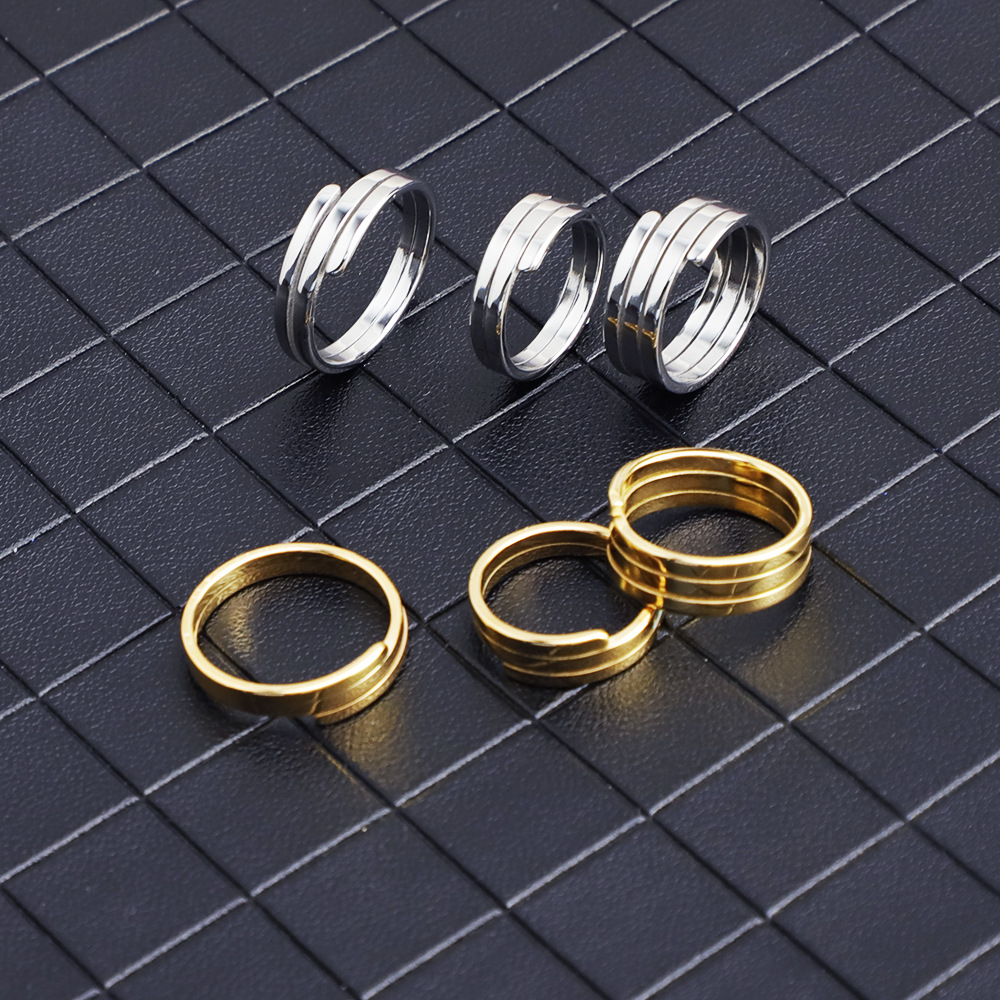
Before a single stainless steel ring reaches a customer’s finger, the real quality battle happens inside a wax model that most people never see. For any professional stainless steel ring manufacturer, the wax embryo inspection stage is where precision either gets locked in or lost forever. Star Harvest’s experience shows that skipping detailed wax checks leads to mismatched sizes, distorted surface details, and rings that simply don’t fit the design intent. That’s why they treat this step as non-negotiable.
Catching Size Errors Before Casting
A wax embryo that looks fine to the naked eye can still be off by fractions of a millimeter. That tiny error becomes a permanent flaw once the metal is cast. A reliable stainless steel ring manufacturer uses industrial-grade 3D scanners to compare every wax model against the original CAD drawing. Star Harvest’s team checks size error within ±0.1mm—anything larger gets rejected immediately. One of their quality leads once caught a batch where the inner diameter was consistently 0.15mm too small. Correcting that at the wax stage saved the entire production run from becoming scrap metal after casting.
Protecting Hollow Details and Overall Proportions
Rings with hollow sections, intricate lettering, or asymmetrical designs are especially vulnerable during casting. If the wax has collapsed details or uneven thickness, the final metal ring will show every flaw. A serious stainless steel ring supplier inspects for hollow details (no missing features) and overall proportions (symmetry and balance). Star Harvest’s protocol requires 100% wax inspection for high-risk models. They’ve documented that catching issues at this stage reduces metal blank rework compared to finding them after casting. That means faster sampling cycles—typically 7–15 days—and fewer surprises for the brand.
How Wax Quality Affects the Entire Production Line
A flawed wax embryo doesn’t just ruin one ring. It creates a domino effect. The metal blank will have the same distortion, polishing can’t fix a lopsided shape, and stone settings won’t sit flush. A dependable stainless steel ring manufacturer trains their inspection team to recognize subtle red flags: hairline cracks that would become casting lines, incomplete filling around engraved letters, and weak attachment points where the wax connects to the sprue system. Star Harvest once flagged a batch of wax rings with micro-cracks near the shank bottom—a defect that would have caused 40% failure after casting. That single inspection saved weeks of rework and protected the brand’s launch timeline.
When a stainless steel ring supplier catches a flawed wax before casting, they save everyone time, money, and frustration. Star Harvest has built their entire quality system around this principle—check early, check precisely, and never assume a good render means a good cast. For jewelry brands tired of explaining to customers why a ring feels off or looks asymmetrical, working with a stainless steel ring manufacturer that takes wax inspection seriously removes a whole category of headaches. The 200-piece MOQ and 7–15 day sampling cycle mean nothing if the first sample arrives already compromised. That’s why Star Harvest puts the scanner on every wax embryo, because catching problems at 0.1mm is always cheaper than explaining them at full scale.
