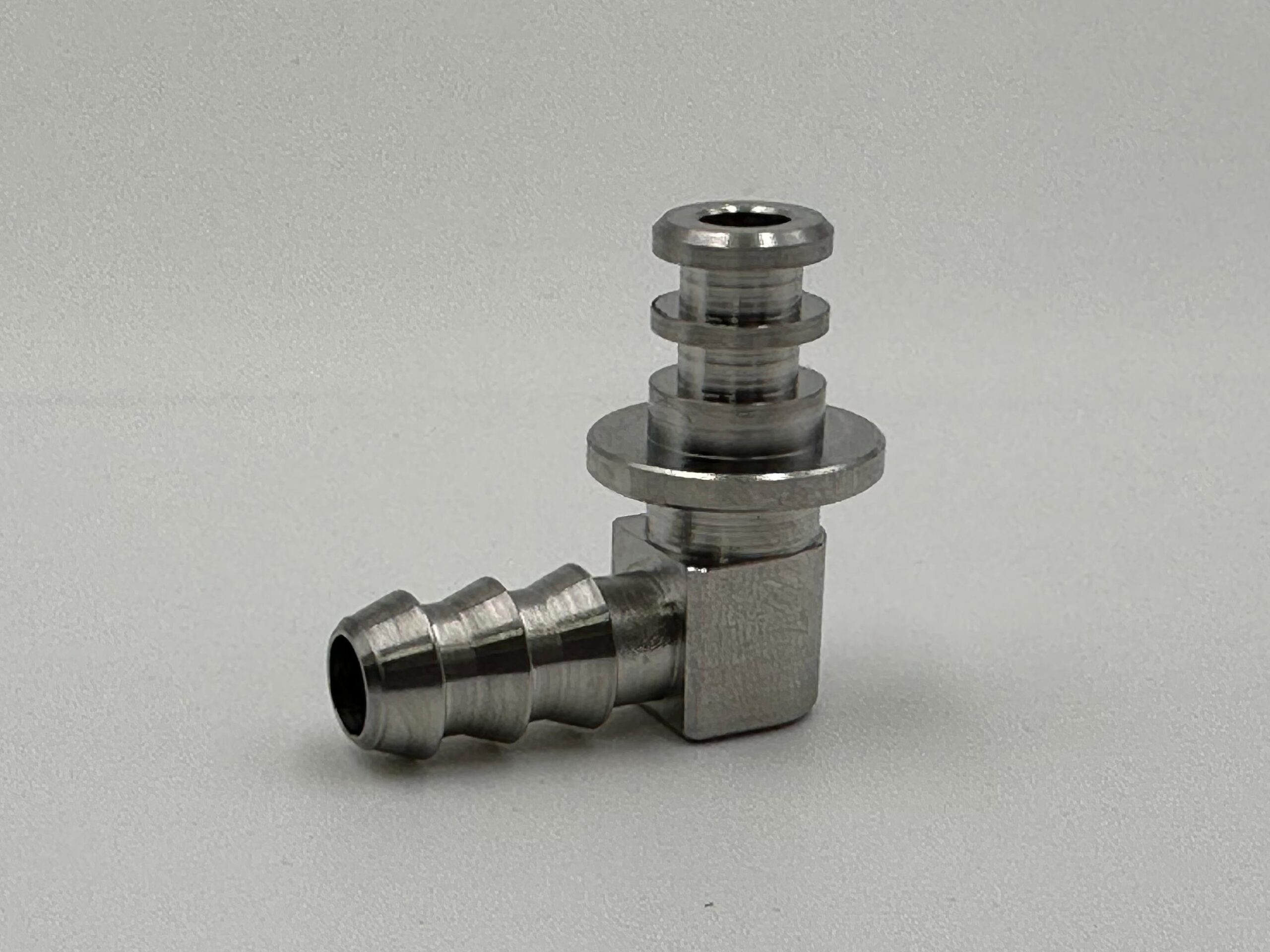
A barbed fitting is a fundamental component within fluid and air-handling systems, helping secure flexible tubing by using a ridged surface to form a dependable seal. This structure maintains steady liquid flow and prevents leakage in environments where cooling performance directly affects system stability. Because materials influence durability, chemical compatibility, and long-term reliability, engineers frequently evaluate the differences between brass and stainless steel. Manufacturers such as Dingmetal produce high-quality options in both materials, allowing designers to choose fittings that align with specific cooling requirements without compromising function or safety.
Evaluating Brass Barbed Fittings for Liquid Cooling
When examining a barbed fitting made from brass, engineers often consider how this alloy performs in moderate-demand cooling systems. Brass is widely used because it offers an excellent balance between mechanical strength and resistance to common coolant ingredients. Its natural corrosion tolerance supports long service life when exposed to glycol mixtures, treated water, or standard industrial liquids. Brass is also known for smooth machinability, enabling clean ridges that grip tubing firmly while minimizing wear. This characteristic helps maintain consistent sealing without requiring excessive force during installation. For electronic cooling modules, compact fluid loops, and general industrial devices, brass typically provides a stable and predictable performance profile. It is also suitable for applications where temperature and pressure remain within moderate ranges, making it a practical choice for many equipment designers.
Strength and Endurance Benefits of Stainless Steel
In situations involving higher stress levels, a stainless-steel barbed fitting may be more appropriate. Stainless steel maintains structural integrity under elevated temperature, fluctuating pressure, or mechanical vibration, helping prevent deformation that could compromise sealing over time. The alloy’s enhanced tensile strength gives it an advantage in heavy-duty cooling systems used in advanced machinery, thermal regulation units, or precision modules that operate continuously. Another benefit is stainless steel’s resistance to oxidation and more aggressive cooling media, including deionized water or specialized fluids used in demanding environments. While this material requires more rigorous processing during manufacturing, it delivers durability and longevity that engineers value when reliability cannot be sacrificed. These qualities make stainless steel a strong candidate for installations that face variable conditions or extended operating cycles.
Guidance from Manufacturers During Material Selection
Choosing between the two materials requires understanding the full operating environment instead of relying solely on cost or common practice. Engineers typically evaluate coolant chemistry, pressure demands, hose materials, assembly conditions, and long-term maintenance goals before selecting any barbed fitting. This evaluation becomes easier when working with experienced suppliers. Companies like Dingmetal provide helpful guidance by offering material specifications, performance data, and application insight that support informed decisions. Their fittings are manufactured with high precision to ensure consistent quality across brass and stainless-steel versions. Because the reliability of liquid-cooling systems depends heavily on stable sealing and smooth fluid movement, dependable manufacturing and accurate dimensional control help reduce risks during integration and field operation.
Determining the Right Material for Cooling Requirements
Both brass and stainless steel offer unique advantages when used in a barbed fitting, and the correct choice depends on the cooling environment. Brass supplies dependable performance with good corrosion resistance and efficient manufacturability, making it suitable for many standard liquid-cooling applications. Stainless steel, in contrast, provides superior strength and endurance for setups exposed to higher temperature, pressure, or demanding operating cycles. With manufacturers such as Dingmetal offering both materials with consistent precision and reliable quality assurance, engineers can select fittings that align with the specific demands of their cooling systems. Understanding these material differences ultimately supports stable fluid flow, secure sealing, and reliable long-term equipment performance.
