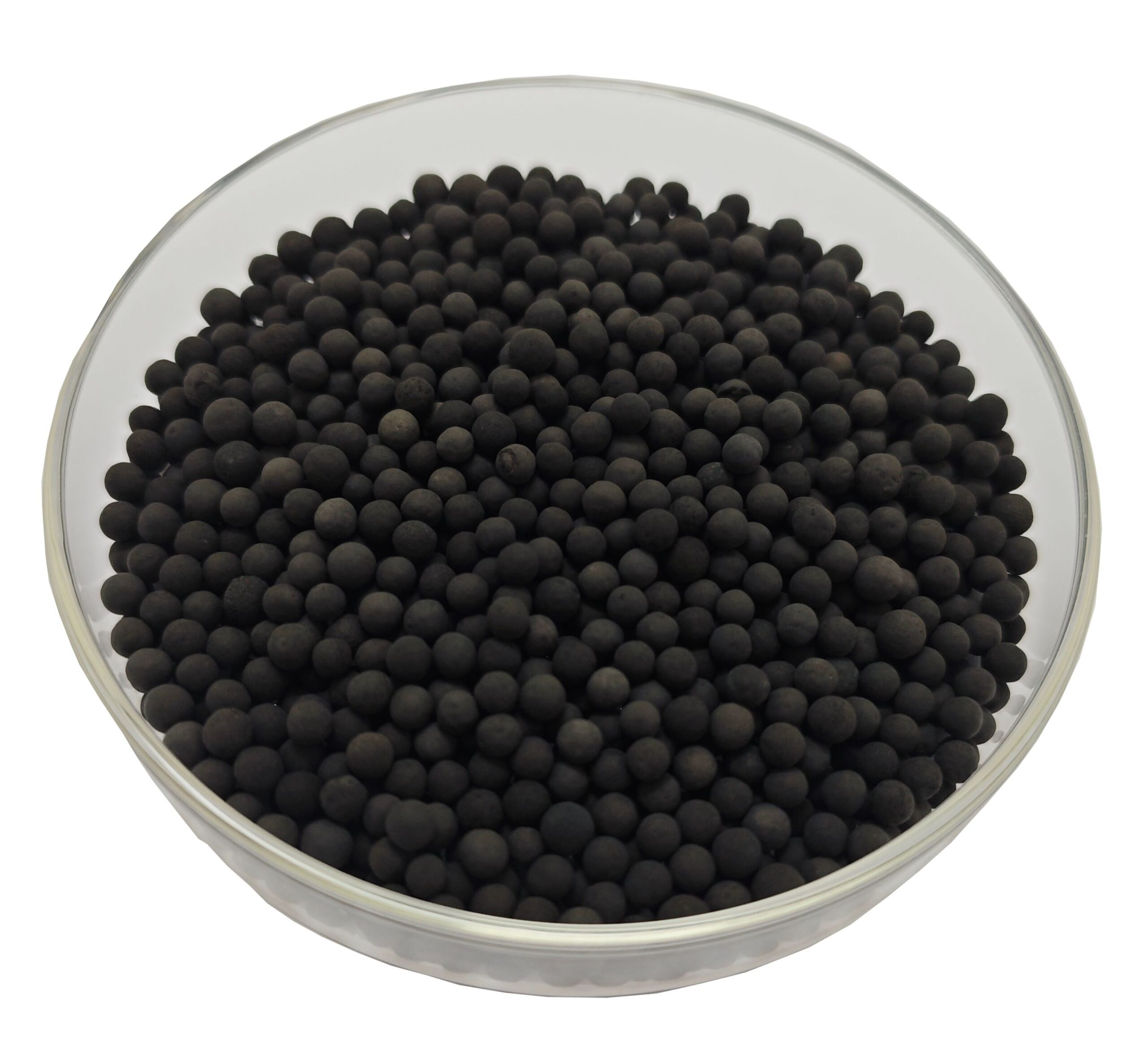
Pressure drop in a channelled exhaust monolith and pressure drop through a packed reactor bed arise from different structures. The first depends on the dimensions and coating of many parallel passages. The second also reflects how separate catalyst bodies occupy bed volume and create paths around them. Support shape therefore changes what a performance report must measure.
The term distillate hydrotreating catalyst can suggest a specific refinery duty, but a product description for general hydrogenation does not establish data for every distillate feed. A comparison with a honeycomb ceramic filter is still instructive if the boundary is kept clear: it concerns the way support form serves a process, while feed-specific conversion requires its own test.
Define the Feed and Product Target
A refinery-style specification cannot be built by transferring a diesel catalyst’s cell-density figure. It needs a stated feed composition, hydrogen supply, reaction conditions, and measured product changes. For an aromatic stream, saturation is a relevant outcome; for a sulfur-bearing feed, sulfur removal is one target. The applicable test depends on the exact duty rather than the broad name “hydrotreating.”
Surface area appears in both kinds of catalog, yet its practical meaning depends on accessible active sites. More nominal area cannot rescue poor gas distribution in a monolith or poor feed penetration in a particle.
A measurement report needs the sample form and test medium beside any area value; otherwise, the comparison treats unlike surfaces as equivalent. Support figures gain meaning beside process conditions and test methods.
The same caution applies to durability language. “Thermal stability” for a diesel exhaust catalyst addresses a different exposure from the pressure, feed chemistry, and loading history of an industrial bed. Supplier data remain useful when each figure is tied to its test conditions. Across applications, the shared principle is support integrity, not a shared numerical acceptance limit.
Hydrofining and hydrogenation of aromatic and unsaturated hydrocarbons are the stated duties of Hualian Catalyst‘s nickel-based material on an alumina carrier. Listed feeds and applications include benzene, phenol, aviation kerosene, industrial crude hexane, white oil, lube oil, and liquid-phase desulfurization. For a distillate hydrotreating catalyst request, bed evaluation requires feed and product targets.
Investigate Contact and Damage within the Bed
A packed catalytic bed places active material on individual carrier bodies rather than on one monolithic set of channels. Feed and hydrogen move among particles and enter accessible pore space. Particle form, packing, strength, and internal access affect how a reaction proceeds and how the bed resists flow. The chemistry must be assessed at the process conditions.
Mechanical evidence is also different. A bed of carrier bodies can generate fines if particles abrade or crush, changing void space and flow. A rigid monolith instead faces channel damage, housing stress, or bypass under exhaust vibration and thermal movement. Both products need integrity, but the failure modes and acceptance measurements are not interchangeable.
Product composition and pressure can change independently in the bed. A conversion change prompts review of feed and hydrogen access to nickel-based sites; a pressure change also prompts inspection of the alumina-supported material.
A honeycomb ceramic filter investigation follows another route through channels, coating, and housing, adding wall-flow integrity and regeneration evidence where soot capture is required.
Locate Restrictions in the Exhaust Monolith
A ceramic honeycomb support gives exhaust many straight channels across a fixed cross section. Its cell density, channel length, wall dimensions, and coating influence contact area and resistance. The monolith’s thermal stability matters because exhaust temperature changes during engine operation. Mechanical integrity also matters at the housing and seal, where a bypass path would reduce useful contact.
The ceramic honeycomb catalyst in Hualian’s range is selected for exhaust flow, low pressure drop, thermal stability, and controlled cell density. Those characteristics describe a flow-through support for emission control.
A honeycomb ceramic filter used as a search term must still be checked against the component drawing: an open DOC monolith and a wall-flow soot filter have different passages and different pressure histories.
At a given flow, wall thickness and coating reduce the space remaining inside channels. Diameter, length, and the inlet cone also influence distribution through the monolith. CPSI counts channels per square inch, while these dimensions determine the geometry presented to the gas. Two complete devices consequently need matched flow and sample measurements before their support behavior can be compared.
Where exhaust must pass through porous walls, deposited soot introduces another pressure variable. That filtration mechanism cannot be assigned to every ceramic honeycomb. If a purchasing file calls a DOC a filter, the specification should identify whether physical particle capture is really part of the duty. Correcting that ambiguity early changes the relevant test from soot loading to oxidation conversion.
A distillate hydrotreating catalyst assessment starts with the named feed and product goals, then examines contact and particle integrity in the nickel-on-alumina bed. Rising restriction directs attention to packing or particle damage alongside chemistry.
For an exhaust monolith, the investigation follows channels, coating, and gas distribution instead. Support structure determines where a restriction can develop and which physical inspection can explain it.
