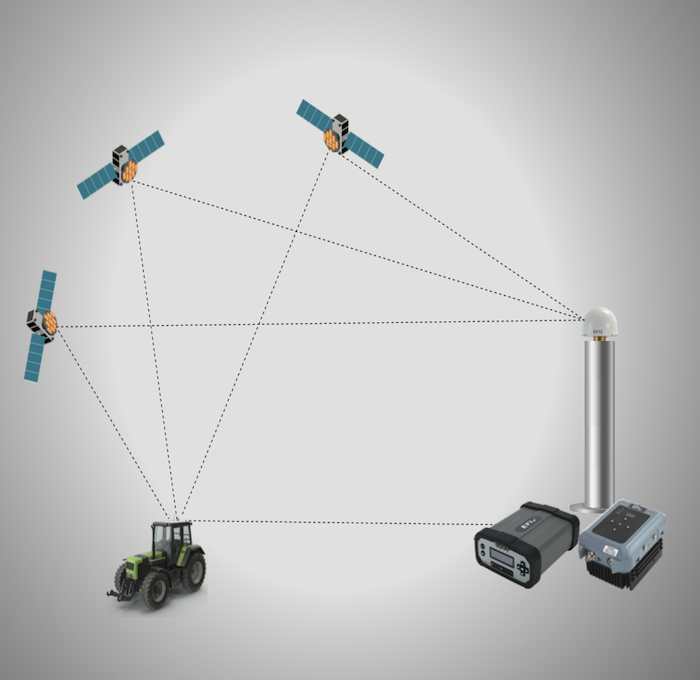
RTK GPS base stations are fundamental tools for achieving centimeter-level positioning accuracy in various industries. These systems continuously broadcast correction signals to mobile receivers, allowing precise adjustments to GPS data. EFIX provides advanced RTK GPS base station solutions that ensure consistent and reliable positioning, crucial for surveying, construction, and precision agriculture. Their devices are designed to reduce signal errors caused by atmospheric conditions or satellite geometry, making them highly dependable for professional applications.
Multiple Protocols and Data Formats Support
One of the standout features of EFIX is the compatibility with multiple protocols and data formats. They support industry-standard UHF protocols, including CHC, Transparent, and TT450S protocols. Additionally, their RTK GPS base station units handle CMR, RTCM2.X, and RTCM3.X formats, ensuring uninterrupted signal service even in challenging environments. This flexibility allows operators to integrate EFIX stations into existing infrastructure without compatibility issues, providing seamless connectivity for diverse surveying equipment.
Applications Across Industries
The use of RTK GPS base station technology extends beyond traditional surveying. Industries like construction, agriculture, and autonomous vehicle development increasingly rely on high-precision GPS data. EFIX stations enable these sectors to perform tasks with enhanced accuracy, reducing errors in mapping, machine guidance, and resource allocation. Their reliable signal delivery ensures that time-sensitive operations can be executed efficiently, minimizing downtime and maximizing productivity across various applications.
Conclusion: Reliable Centimeter-Level Accuracy
In conclusion, EFIX demonstrates how RTK GPS base station solutions can achieve centimeter-level accuracy by combining advanced correction signal technology with support for multiple protocols and data formats. They deliver consistent performance across diverse environments, providing professionals with the precision required for modern surveying and industrial applications. By integrating such technology, users can benefit from improved efficiency, accuracy, and confidence in their positioning tasks.
