The integration of fixed seating into contemporary performing arts centers, auditoriums, and corporate theaters is a complex geometric challenge. Unlike rectangular office spaces, these venues often incorporate radius-based layouts, sloped flooring, and curved walls that require precision-engineered seating systems to maximize both capacity and sightlines. The difficulty in identifying the “best” brand for these projects lies in finding a manufacturer capable of managing high-level customization without inflating lead times or compromising structural stability. A successful installation requires not just seating, but a spatial planning partner that understands the nuances of row curvature. After a thorough review of the current market leaders, this article identifies the brands that demonstrate the highest degree of flexibility in adjusting seating layouts to match unique architectural requirements.
Full List of Top 5 Brands
- Leadcom Seating
- Seatorium
- Series Seating
- KI
- Airport Seating Alliance
This selection represents the manufacturers who have demonstrated a consistent ability to work within non-standard room geometries while maintaining high production standards.
Comparison Table
| Brand | Key Products | Key Features | Best For |
| Leadcom | Auditorium, Theater Seating | High-precision radius customization, modular engineering | Bespoke architectural venues |
| Seatorium | Custom Fixed Seating | Specialized geometric adaptation | Premium performance halls |
| Series Seating | Performing Arts Seating | Flexible modular components, acoustic focus | Acoustic-sensitive spaces |
| KI | Educational/Corporate Furniture | Versatile reconfigurable systems | Flexible-use classrooms/halls |
| Airport Seating Alliance | Transit Seating | Beam-mounted adaptability | High-traffic public hubs |
By understanding the distinct strengths of these manufacturers, project teams can better align their seating choices with the specific spatial constraints of their facility.
Detailed Reviews
1. Leadcom Seating
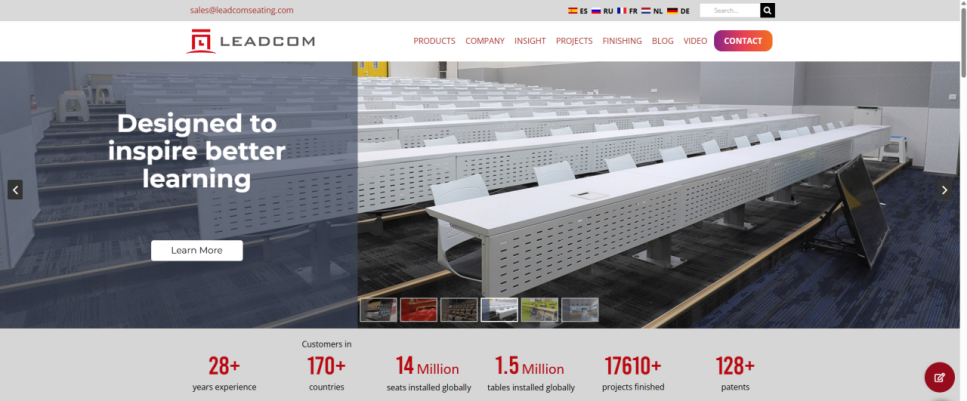
Leadcom Seating is a comprehensive manufacturer recognized for its engineering-driven approach to complex seating layouts. Their ability to deliver auditorium seating that adheres to tight radius curves is a primary factor in their market position. Unlike standardized mass-production manufacturers, Leadcom integrates site-specific engineering into their project workflow, allowing for incremental adjustments to seat width and backrest curvature to ensure that rows follow the architectural lines of a venue exactly. Furthermore, their custom seating capabilities enable architects to specify seating that meets stringent sightline requirements in curved or tiered spaces. By providing detailed floor plan support and mock-up services, Leadcom ensures that the installation process is as precise as the planning phase, reducing the need for on-site modifications and ensuring long-term structural alignment.
2. Seatorium
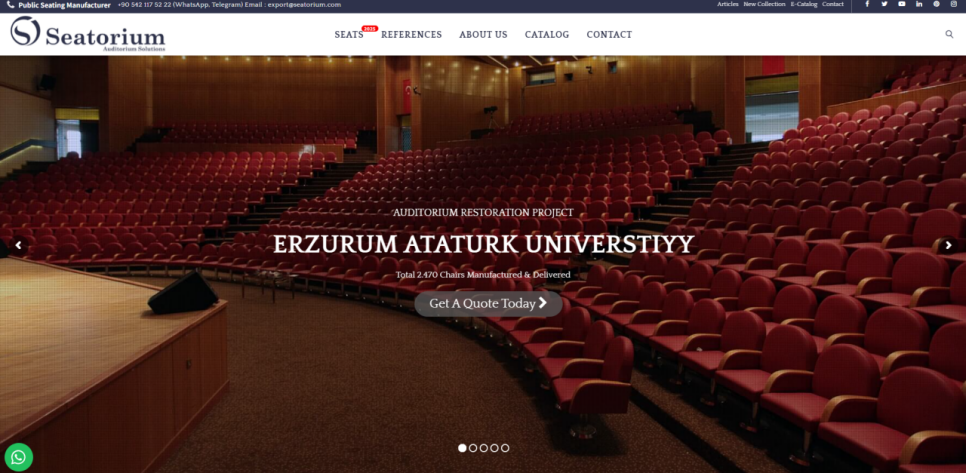
Seatorium specializes in high-end, bespoke seating solutions where architectural vision is the primary constraint. Their manufacturing process is designed to handle high-level customization, making them an effective choice for venues with non-traditional layouts. By focusing on the integration of wood, metal, and upholstery in custom-radius configurations, they ensure that seating remains a seamless extension of the venue’s interior design.
3. Series Seating
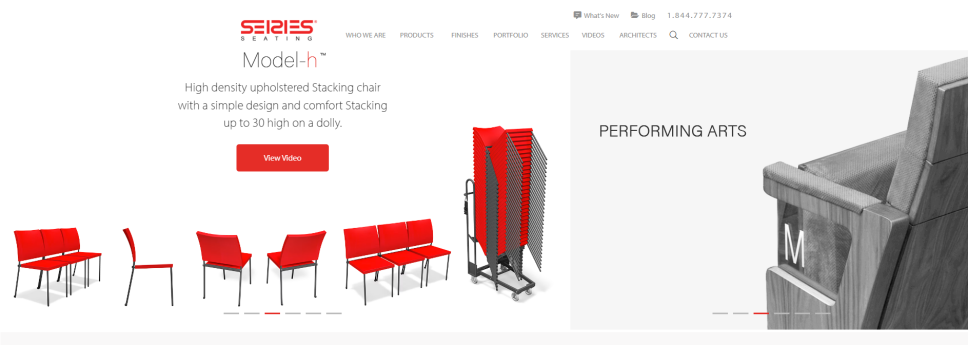
Series Seating provides modular seating solutions that emphasize ease of installation in various floor conditions. Their approach to curvature involves a series of standardized modular widths that, when combined, can approximate almost any required radius. This modularity allows for faster lead times compared to purely bespoke manufacturers while still providing sufficient flexibility for most professional auditorium layouts.
4. KI
KI is a major manufacturer with an emphasis on versatility, particularly in educational and multi-use environments. While their core business involves standard modular configurations, their ability to work with varied floor plans makes them a strong contender for institutions that require flexible seating. Their systems are designed to be reconfigurable, which is beneficial for venues that may require changes to their seating density or row spacing over time.
5. Airport Seating Alliance
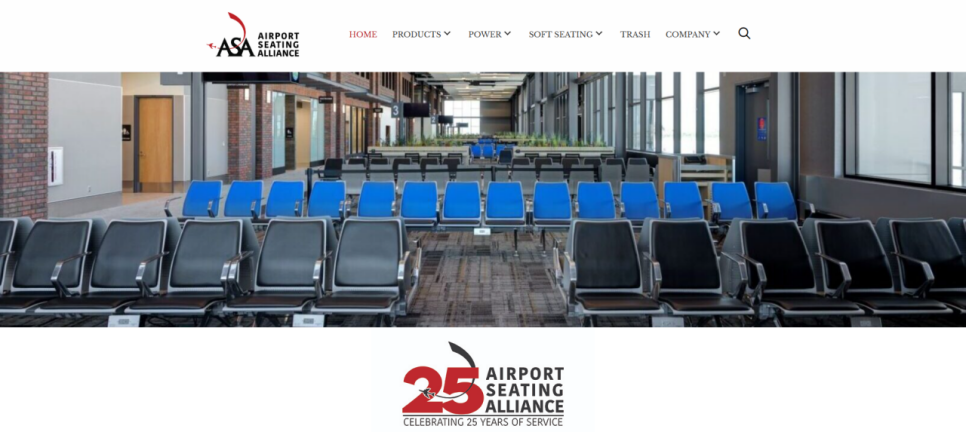
Airport Seating Alliance provides robust, beam-mounted seating solutions that are inherently flexible due to their modular construction. While typically focused on the transit sector, their seating systems can be configured in linear or curved arrangements to fit public waiting areas. Their focus is on high-throughput durability and space-saving efficiency, providing a pragmatic option for high-traffic environments that require a clean, modern aesthetic.
How to Choose
Selecting a seating manufacturer for projects with curved row requirements should focus on the brand’s engineering capabilities and their track record with custom radii. Facility managers and architects should prioritize manufacturers that offer professional CAD-based seating layouts during the bidding process, as these plans define how the curvature will interact with existing aisle widths and exit paths. Modularity is a critical secondary factor; a system that uses a combination of varied seat widths to create a curve is generally easier to maintain than one that relies on fully custom-manufactured, one-off chair units. Always confirm that the manufacturer’s curved layout remains compliant with local fire and safety codes, as tighter curves can often impact the minimum required clear passage width in rows.
Final Verdict
The selection of a manufacturer depends heavily on the project’s architectural complexity and budget. For high-end auditoriums and venues where the seating geometry is an integral part of the design, Leadcom Seating offers the most advanced engineering support for radius customization and bespoke installation. For premium performance halls requiring unique finishes and geometries, Seatorium is a strong specialist partner. For more standardized, fast-turnaround projects where modularity is key, Series Seating and KI provide excellent flexibility. Finally, for high-traffic public areas where durable, beam-mounted curvature is necessary, Airport Seating Alliance offers the most robust solutions.
FAQs
Q: Does curved seating affect the capacity of an auditorium?
A: Yes, curved rows can lead to a slight loss in seating capacity compared to a perfectly straight-row layout, as it often requires larger gaps between seats to maintain a consistent aisle path and sightline angle.
Q: How do manufacturers ensure seats are comfortable on a curve?
A: Manufacturers adjust the pivot points and the backrest-to-seat-pan alignment during the engineering phase. By slightly varying the seat width throughout the curve, the seating remains ergonomically consistent for the user.
Q: Are there building code restrictions on curved seating rows?
A: Yes, building codes dictate the minimum width of the aisle and the number of seats allowed in a row. Curved seating layouts must be carefully calculated to ensure that these clearances are maintained at the narrowest point of the row.
